Résumés des interventions au colloque de Munich qui s’est tenu les 24,25,26 novembre à la Bayerische Akademie der Wissenschaften.

David Andolfatto
Birds and Equids on the Memorial Monuments of Western Nepal. Preliminary Remarks on a Medieval Himalayan Menagerie
Stone architecture in western Nepal, which emerged around the 9th century, was significantly
influenced by the neighbouring state of Uttarakhand, particularly adopting the latinā nāgara styles
prevalent in northern India. Despite this influence, Nepali architectural developments are notable
for their lack of distinctive stylistic elements that typically demarcate different time periods.
Instead, these structures are often characterized by a low-relief decorative style. Key architectural
features, such as stone pillars, latinā nāgara temples (also known as śikhara and deval), and fountains,
frequently incorporate low-relief decorative patterns, inscriptions, and anthropomorphic or
zoomorphic figures. The latter category predominantly includes birds, equids (horses and related
species), and felids (cats). However, the origins and symbolic significance of these iconographic
elements remain understudied. To better understand the purpose of zoomorphic imagery, it is
essential to examine the cultural contexts that produced these artifacts and the architecture on
which they were carved. The monuments of western Nepal were constructed within a multi-
religious landscape, reflecting Hindu, Buddhist, and vernacular traditions. Attested since at least
the 14th century, oracular cults are still practised in temples made of stone and wood, where a rich
menagerie can also be seen. Built in the 20th century, some of these temples contain carvings of
hornbills, which hold a psychopomp role in Himalayan shamanism. Similarly, equids are
intrinsically linked to warrior imagery from northern India and are depicted on stone pillars and
temples in western Nepal. In oracular cults the vehicles of vernacular deities, who are usually
deified ancestors, are associated with horses. This presentation will explore the representation of
birds and equids in western Nepalese architecture between the 9th and 15th centuries. It will first
highlight the complex historical context of the area, its early Tibetic culture and the emergence of
warrior and religious castes originating from northwest India. This will be followed by an overview
of the birds and equids represented on the monuments. The purpose of the monuments
themselves will then be investigated based on epigraphy and extensive archaeological data gathered
through surface surveys. The discussion will also incorporate ethnographic sources to elucidate
the roles of these animals in local religious traditions. The talk will argue that birds and equids were
£not merely decorative elements but held profound psychopomp significance, and that their
presence gives us information about the purpose of the monuments and the people for whom they were built.
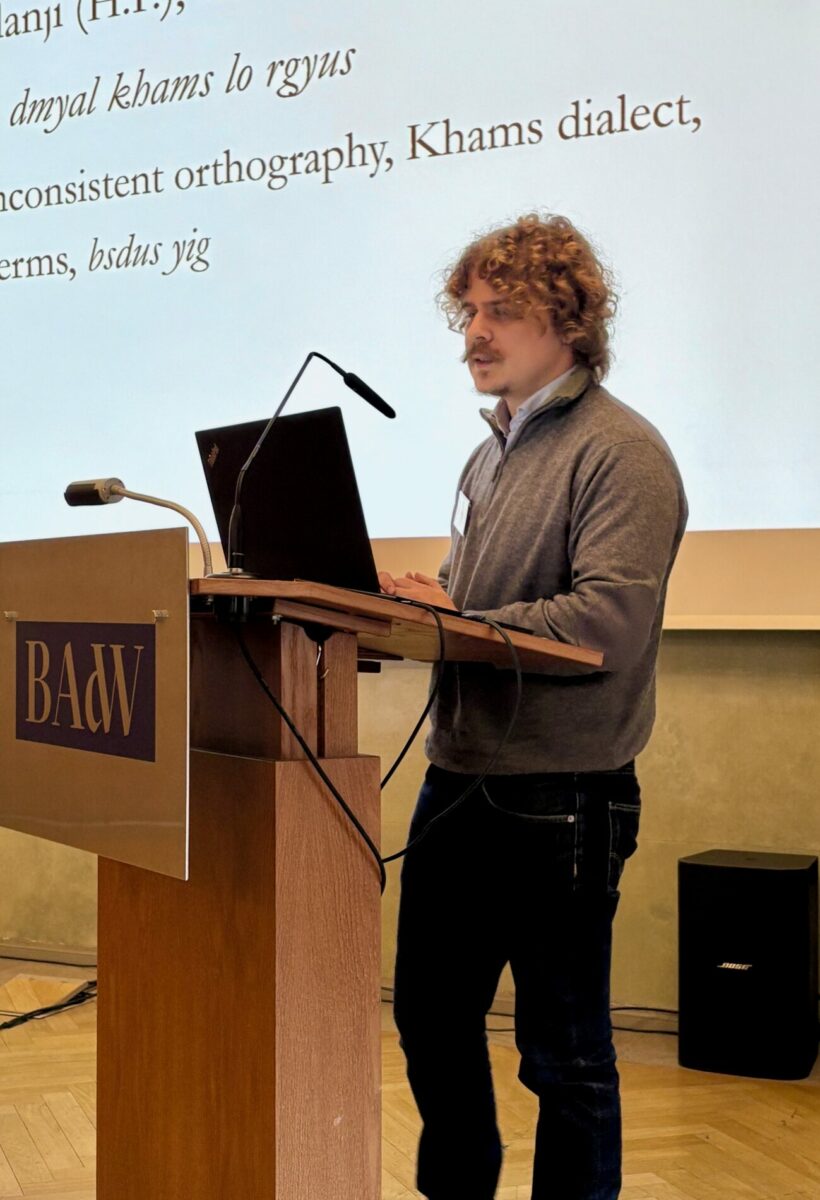
Federico Benvenuto
What Can Horses Tell Us about Tibetan ’Das Log (“Returner-from-the-Afterlife”) Narratives?
The importance of the horse as a psychopompic animal in the societies of Tibet and Inner Asia is
widely acknowledged. As the Call for Papers recalls, horses enabled the rapid transmission of
messages across the Tibetan plateau during the imperial period. It is therefore not surprising that
they also appear as carriers of guidance and communication – not only amongst the living, but also
between the living and the dead. In this paper I wish to examine the rather frequent instances of
horses in La phyi sprul bsku (sic, read sku) dmyal khams bskor, a previously unexplored (and currently
undated) ’das log (“returner from the afterlife”) narrative from the Bön tradition. Although ’das log
literature has adopted the Indic biographical and autobiographical genres of rnam thar and rang rnam
at least since the 15th century, it has been convincingly argued that it has antecedents in the Chinese
genre of “tales of the strange” (zhiguai xiaoshuo 志怪⼩說), among others. Nevertheless, as Tucci and Nebesky-Wojkowitz have noted, these texts are characterised by a “shamanistic” component,
possibly implying the assimilation of an indigenous tradition of travellers to the afterlife into a
Buddhised practice and literary genre (Nebesky-Wojkowitz 1975, Tucci 1980). Indeed, there are
several important differences between literary ’das log and those of the so-called “living tradition”
(Pommaret 1989). Among these, the latter are sometimes able to make repeated journeys to the
afterlife and often lead a life not very different from that of other shaman-like religious figures,
such as Ladakhi lha pa or lha mo (Prude 2011). This may be a sign of the persistence of an indigenous
phenomenon, later Buddhicised and crystallised in literature (Epstein 1982, Pommaret 1989, Tucci
1980). The reverse may also be true, with Buddhist literature – and the title of ’das log itself, with
its associated prestige – strongly influencing a “shamanistic” tradition (Plaisier 2012, Prude 2011).
In fact, these phenomena appear to have been co-constructed, making a clear understanding of
their development difficult at this stage of our knowledge of indigenous religious history. While it
may not yet be possible to pinpoint exactly how this co-construction happened, a first step might
be to look more closely at the recurring appearance of horses – especially since they feature
prominently in ancient imperial funerary texts (Bellezza 2013, Dotson 2018, 2022) as well as in the
traditions of the Himalayan Gurung, among others (Armand 2025 [forthcoming], Pignède 1966). It
is therefore not surprising to find the persistence of such motifs in a Bönpo text, which is well
known for preserving elements of indigenous knowledge. More generally, ’das log texts often
incorporate vernacular knowledge, particularly in their depictions of bar dos, which are often
characterised by a depiction of the afterlife different that is strikingly autochtonous (Bellezza 2013,
Cuevas 2007, 2008). In this context, the repeated appearances of horses in La phyi sprul sku’s
account deserve closer attention. Situating these occurrences within a broader context may allow
for fruitful comparisons, offering a privileged perspective on the social life of indigenous afterlife
beliefs and the historical interrelationships between Buddhism, Bön and the wider indigenous
religious continuum.
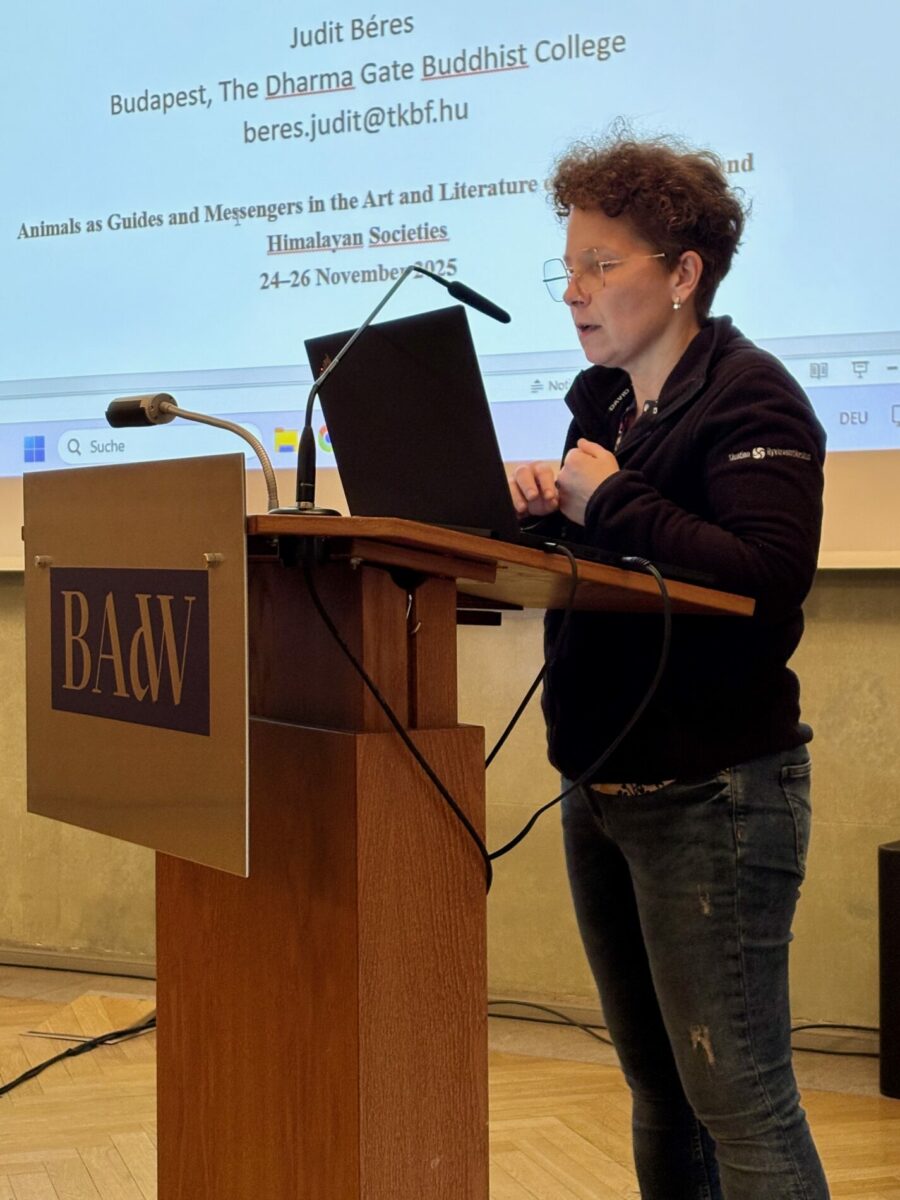
Judit Béres
The Horse in Tibetan Folklore Texts: Functions, Meanings, and Expressions: Functions,
Meanings, and Expressions
In Tibetan folklore texts, the horse (rta) as a motif bears a special significance: it appears not only
as a character or « participant » of a tale but also as a vehicle of complex symbolic structures. The
horse plays a prominent role in this cultural scene, and as an animal with symbolic meaning, it
plays an important role in many narratives. In this paper, I examine the aspects of the horse
appearing in folklore texts. My analysis aims to explore in what functions and with what meanings
the horse appears in lyrical and epic folklore genres, how it is conceptualized in Tibetan imagery.
The horse motif is often connected to concepts such as freedom, strength, beauty, loyalty, and
especially speed. It often appears in folk songs and proverbs as a parallel image to human beings,
and the attributes of the horse can serve as a metaphor for human attributes. In folk tales, the
horse appears as a helping creature with superhuman abilities (cang shes rta pho), which is not only
a loyal companion helping the hero, but can also provide a key to understanding karmic
connections. The horse can appear as a bearer of moral and social values: in folk tales and moral
fables, it is the embodiment of self-sacrifice, self-discipline, or courage. In these narratives, the
horse becomes an allegory of social norms, and its movement, appearance, behaviour, and
characteristics can be the source of numerous linguistic expressions and similes. These linguistic
expressions are used both in everyday life and poetry. In this paper, I examine what role the horse
plays in Tibetan culture and conceptualization through linguistic expressions. I conduct qualitative
content analysis embedded in a cultural context, taking into account the specificities of the Tibetan
religious and historical background, thus applying an interdisciplinary approach that contributes
to a deeper understanding of the symbolism of horse through Tibetan folklore, demonstrating its
multifaceted role in Tibetan cultural memory.
Daniel Berounský
The Sacrifice of Animals called Shugma and the Meaning of the Category of the Tibetan Deities
Shug-gön
Animal sacrifices in particular are a controversial topic for Tibetan Buddhists of various schools.
However, in the perspective of their performers, one can find elements that testify to an immense
respect for animals, which are sacrificed precisely for their extraordinary qualities. This is also the
case with the animals that will be discussed in this paper. They appear in the somewhat obscure
context of a group of deities that are considered in the texts of the monastic Bön, but also in the
texts of Buddhist sects, as one of several categories of so-called ‘warrior deities’ (Tib. dgra lha/sgra
bla/dgra bla). Their name is Shug-gön (shug/ shugs mgon) and the meaning of this word remains
unclear. However, among the hundreds of surviving texts of a lay ritual tradition called leu (le’u),
which was widespread on the northeastern edge of the Tibetan plateau in the Minshan Mountains,
there are unique manuscripts with a ritual dedicated to animals called shug. Individual texts are
dedicated to sheep, goat, yak, cow, ox, and chicken (lug shug, ra shug, g.yag shug, ba shug, glang shug, bya shug). These animals are mainly offered to the gnyan deities frequently worshipped in the given
region. They are called shug ma, and the meaning of this word can probably be interpreted as
“mediators” or even “brokers”. This paper will deal with these texts, which are usually introduced
by a short series of myths about the origin of these animals.
Qiongying Cai
Spirit-Medium, Messenger, and Eco–Symbol: Animal Poetics in the Dongba Myth The White Bat’s Scripture Retrieval and Its Implications for the Himalayan Cultural Sphere
The Dongba myth The White Bat’s Scripture Retrieval, a core text of Naxi religious literature, employs
the narrative of a white bat’s sacred mission to illuminate animals’ multifunctional roles as “spirit-
mediums” and “ecological symbols” in Himalayan cross-cultural contexts, merging visual
semiotics and ritual analysis to explore how animal symbolism is embedded within transregional
cultural interactions, narrative logics, and natural order. The myth recounts the bat’s quest to
retrieve divination scriptures from the deity Panzi Shamei, a journey disrupted by taboo violations
that scatter the texts, while the death of a divine frog catalyzes the Five Element cosmology (Wood,
Fire, Metal, Water, Earth), intertwining animal agency with cosmic creation. Through Dongba
pictographs – a living script blending semantic and artistic functions – the bat’s iconography
(dynamic wing lines, minimalist head design) transcends textual documentation to serve as a
ritualistic visual medium, amplifying its sacred role as a boundary-crossing messenger. Cross-
cultural comparisons with Himalayan archetypes, such as Tibetan Bon’s “divine bird” messengers,
reveal shared themes of mediation yet distinct dualities in bat symbolism, positioning Naxi Dongba
culture as a unique interlocutor between Tibetan, Han, Mongol, and Bai traditions. Eco-poetically,
the frog’s metamorphosis into directional elements, mapped onto the Bagetu model’s chromatic
symbolism (red, black, yellow, green, brown) and ethnic spatial orders, reflects an integrative
cosmovision harmonizing socio-natural hierarchies. The study frames three dimensions of
Dongba animal poetics: the bat’s narrative arc (taboo violation, failure, redemption) mirrors ritual4ethical codes; the interplay of pictographs and oral performance enables dual artistic-literary
expression; and animal symbols anchor ecological philosophies that bridge nature and culture.
Based on the classic narrative of the Naxi Dongba mythological text, this study promotes an
interdisciplinary dialogue on the “animal turn,” mythological semiotics, and Himalayan
ecocriticism, offering a holistic lens to decode the entangled sacred, artistic, and ecological agencies
of animals in cross- cultural imagination.
Nachiket Chanchani
A Bird’s Eye View of Some Encounters, Conversations, and Co–Creative Enterprises in the
Brahmaputra Valley
In the riverine Brahmaputra valley nestled between ranges of the eastern Himalayas, some species
of water birds are admired and others detested. Because of their observable behaviour, water
raptors – including Pallas fishing eagles (Haliaeetus leucoryphus) that seasonally migrate to the valley
from the Mongolian steppe – are regarded as paragons of courage, steadfastness, non-hoarding,
and the ability to unobtrusively observe events without being drawn into them, qualities an ideal
human devotee should possess. Thus, they are commemorated in chimeralike sculptures erected
in monasteries and temples across the valley. On the other hand, because of their proclivity to
stride through murky swamps and search for and collect things from mounds of discarded waste
various species of herons, storks, and other wading birds that are endemic to the valley are loathed.
The case of Mulayam, a purple heron (Ardea purpurea), is thus intriguing. At Hajo – historically a
sacred centre that drew waves of Buddhist pilgrims and traders from Bhutan and Tibet and
travelers from other lands and today a disadvantaged suburb of bustling Guwahati city in the
Brahmaputra valley – Mulayam and two sidelined Moriya Muslim brass smiths live together in a
modest hut. Even as there are differences of opinion among them, the bodies, behaviours, and
minds of the two men and bird are periodically entangled as they work together at the threshold
of their dwelling to make new brass vessels from scrap metal whose forms are inflected by avian
sensibilities. They also repair antique containers. I postulate that the trio laboriously make and
mend metal vessels with their hands and beak (arguably obsolescent modes of production as
manufacturing technology exists) because these modes are advantageous to them. They are the
means through which the marginalized trio articulate new ideologies, find creative satisfaction,
disrupt old ways of knowing, and navigate new ethical positionalities as geomorphologies shift,
political currents change, and provincial governments try to evict them.
Jorinde Ebert
A Swarm of Fish in Painted and Gilded Fragments of a 13th or 14th Century Japanese
Vimalakirti Nirdesa Buddhist Picture Book (ehon) from the Collection of Maria Theresia in
Schloss Schönbrunn
The six fragments of this very important early Buddhist Japanese Vimalakirti Nirdesa ehon have
gone largely unnoticed because they were not employed as art works in their own right, but only
utilised as reinforcements on the reverse of the Indian miniatures of the Feketin Cabinet in
Schönbrunn. Maria Theresia used the Feketin Cabinet in Schönbrunn, which was refurbished
around 1763 to 1765, for private audiences. When exactly, in what condition, and for which
purpose the Vimalakirti ehon was originally acquired by Maria Theresia is to my knowledge
undocumented. However, the 17th century Indian miniatures of the Feketin Cabinet are supposedly
from the private collection of the famous Dutch painter, Rembrandt (1606–1669) who was also
an avid collector of Japanese papers. It is well researched that he used Japanese paper for his own
artistic work from around the year 1647 on. In the 1980s Dietrich Seckel was the first to identify
the six fragments of our Vimalakirti Nirdesa as parts of a 13th/14th century Japanese ehon. But he
was not able to pinpoint the topic of the six fragments. When working in Schloss Schönbrunn in
2001, I was able to identify them as parts of a Vimalakirti Nirdesa for the first time. My paper will
discuss the topic and the meaning of a swarm of fish mentioned in the highly philosophical chapter
six of the Vimalakirti Nirdesa which in its earliest form is considered to date from the year 188
CE.
Jean-Baptiste Georges-Picot
Decking the Dried Deer: Stuffed Animals as the Support for Votive Deposits in the Shrines of
Tibetan Protective Deities
This presentation focuses on my current research on votive deposits in Tibet. Although these
deposits are commonly encountered within the chapels of the protectors (gönkhang, mgon khang) of
Buddhist monasteries or in sacred places (né, gnas), they have elicited only amused disapproval
from Tibetan informants and limited interest on the part of scholars. Various types of objects may
be used for these ex-votos: engraved stones (with an intriguingly high number of prayers for
cleansing the stains caused by killing animals), clay imprints and personal items usually of minor
value: rings, necklaces, watches, pens and so forth. Focusing on the latter type and the ways they
are left, temporarily or definitively, in the chapels of protective divinities (gönkhang, mgon khang),
this presentation will explore their connection with another important protagonist of these
crowded rooms, the chenzik (spyan gzigs), animal remains – either in the form of skulls, dried
carcasses or monastery-made taxidermy. Being only tolerated by the Buddhist institutions, no
dedicated place is allocated for these offerings, and stuffed animals (especially their horns and
antlers) provide convenient supports for objects of all kinds. Conversely, following the suggestion
of Tucci that chenziks are the messengers of the protectors to whom the gönkhang are devoted, it
might be assumed that these animals’ remains are especially qualified to act as mediators between
the wishes of the devotees and these local protectors.
Judith Katalin Hollos
Messenger Birds and Helping Animals in the Traditional Tibetan Opera Tales
Tibetan Opera, or Ache Lhamo (meaning “Sister Goddess”) as it is called in Tibetan language, is an
ancient art form, a secular theatre of Tibet that employs songs, dances and drama to tell stories,
with most of its repertoire drawing on Buddhist teachings and Tibetan history. The namthars (life
stories) told in the so called Tibetan Opera are deeply connected with Buddhist teachings and
generally recount the triumph of good over evil. The folk opera that has both spirtual and non-
spiritual elements is an organic part of the Tibetan culture as Ache Lhamo is still performed today
by troupes in India, Nepal and Tibet and remains a popular cultural attraction. Tibetan opera tales
abound in Buddhist and non-Buddhist folk tale motifs as the protagonists are often aided by beings
with magical powers, for instance by wise dakinis, or animals with magical abilities, for instance
talking parrots, flying horses or helping monkeys. These magical creatures serve as mediators
between realms, help the main characters in their efforts to fullfill their spiritual quest or save them
from a slew of enemies and dangers as in other folk tales of Europe and Asia. In the tale of Sukyi
Nyima, a king becomes infatuated with a beautiful woman whom he takes as his wife despite the
warning of his truth-speaking parrot. In the story of prince Dime Kunden, a talking parrot apears
as a messenger and he leads the prince’s wife, Mende Zangmo to a place where she can find mango
fruits on the barren Hashang Demon Mountain. The same parrot delivers sad messages from the
king’s palace to prince Dime Kunden and his queen who live in exile on the top of the Demon
Mountain. In the story of Pema Obar, a flying horse carries Sudhana to safety as he flees from the
flesh-eating creatures who are chasing him. In the tale of Nangsa Obum, a lama, disguised as a
monkey, aids the female protagonist in her spiritual journey towards enlightment. In the story of
Dowa Sangmo, the benevolent queen manifests as a medicinal snake to save her young son’s life.
In this presentation, I aim to explore the relevance of animals as messengers, guides and helpers
in the traditional Tibetan opera tales and examine how these magical beings shape the opera
stories, the Tibetan folk tale traditions, what kind of function they have in the narratives, how they
may be categorized or what place they have in the systems of well-known folklorists, such as Propp
or Aarne and Thompson, and how they contribute to the rich cultural heritage the genre of Ache
Lhamo carries in modern times.
 .
.
Berthe Jansen
High Peaks, Tall Tales: The Wild Men of Tibet as Oral Tradition
During the initial expeditions to Mt Everest, hairy and mysteriously tall creatures were spotted by£
the Sherpas and explorers high up in the mountains of Tibet. Ever since, many adventurers,
scientists, and scholars have attempted to verify the yeti’s presence in the Himalayas. During the
early 1920s, specifically, there was a veritable media frenzy surrounding this Himalayan abominable
snowman. Seizing the moment, Johan Van Manen instructed his Himalayan assistants to collect
oral stories of the yeti as told by people in and around Darjeeling. These stories were written down
in colloquial Tibetan and kept in a file called “mi rgod lo rgyus”: Accounts of Wild Men. Van Manen
intended to publish these accounts in translation, but this never materialized. In this paper, I will
examine these unique Tibetan language materials: how they occasionally depict the wild men and
then again as having near-human traits. Some are hearsay accounts of actual sightings, while others
are clearly myths that have been told and retold for generations. Ultimately, these stories of the
most low-brow of Tibet’s mythical animals can be seen to reflect the lives and experiences of the
storytellers themselves, who – in the cultural contact-zone that was the greater Darjeeling area in
the 1920s – navigated tradition and modernity.
Marc des Jardins
Spirits officials: How the Chimera of the Black Phur ba are raised into action
The Bestiary of Tibetan religion and of Bon in particular is rather extensive. It is present in the
numerous mythical accounts (smrang) of the Le’u, Srid pa’i bonpo and other ritualists where hybrid
beings, part animal and sometimes part humanoid, officiate as carriers of messages and commands
between realms. They are also very much present in the more institutionalized ritual cycles of
g.Yung drung Bon such as those of Bal phur (dbal phur), Ge khod and others. The circles of these
deities are filled with beings, half birds of prey, hog, bear, and other animals. They run as aids,
assistants, messengers, commanders, and fulfil many functions for the central court of the chief
spirit (gtso bo). Looking at the ritual cycle of the Bonpo Phur nag (’Brug gsas chem ma), this
presentation discusses the rationale behind their presence and activities. Besides identifying their
station within the circle of the Phur nag, how do rituals texts inform us of the manners these
entities are put into action? How does the ritualist interact with them and for what purposes? What
are the ritual procedures for contacting and activating their respective spiritual activities? This
presentation will seek to provide the details of the ritual operations enjoined by the scriptures and
commentarial literature in order to begin drafting a general outline of such praxis from the dBal
phur cycle.
Kiraz Perinçek Karavit
Serpents as Linguistic Mediators: A Symbolic Tool to Claim Legitimacy in Northern Wei (386–
534 CE) Statecraft
This paper will examine the symbolic and political significance of serpents as mediators of language
during the Northern Wei dynasty (386–534 CE) in China. The period was marked by the rise of
the Xianbei Tabgach clan, who unified Turkic and Mongolic peoples and expanded their influence
into northern China, creating a multi-ethnic, multilingual empire. The steppe-nomadic elites
strategically appropriated serpent iconography – rooted in cross-cultural mythologies and Buddhist
cosmology – to legitimize their authority and negotiate linguistic divides over a Han Chinese population. Central to this analysis is the serpent’s function as a mythological intermediary transcending linguistic boundaries. Across diverse cultures, snakes are associated with facilitating communication with spirits, learning animal languages, and gaining esoteric knowledge. Chinese legends, such as Gongye Chang’s story of understanding bird language after eating a snake, Indian tales of cobras providing the ability to speak all kinds of creatures’ languages, and Inner Asian practices highlight the serpent’s role as a linguistic conduit. Upon adopting Buddhism as a state religion, the Northern Wei creatively merged these beliefs with the role of the Indian Buddhist nāga (serpent-deity) as a guardian of esoteric knowledge and symbol of spiritual authority. Providing information about the establishment and founding of monasteries in the sixth-century capital, the Record of Buddhist Monasteries in Luoyang (547 CE) notes that Northern Wei emperors built temples with nāga statues to protect Buddhist scriptures, indirectly linking serpents to the preservation of sacred language. By synthesizing Indian nāga motifs with Chinese dragon symbolism in state-sponsored art, the Northern Wei mirrored the role of transcultural wisdom in these serpentine deities, bridging non-Han rulers to Han subjects. This symbolism persisted beyond monumental state-centric contexts, resurfacing in later Tang-era (618–907) vernacular narratives bianwen (Transformation Texts). In this storytelling tradition revealed in Dunhuang manuscripts, nāgas are depicted as mediators facilitating the dissemination of Buddhist teachings across linguistic lines. Although explicit references to nāgas teaching languages are rare, Dunhuang manuscripts imply that nāgas enabled cross-cultural and linguistic exchanges, reinforcing their role as narrative and ideological mediators. Dunhuang mural art at later periods more clearly ties nāgas to translation patronage by positioning these creatures alongside multilingual inscriptions. Northern Wei likely planted early seeds of this imagery as an enduring template to suggest a cross- linguistic sacred space, especially in the Buddhist context.By adopting the serpentine imagery as guardians of translinguistic wisdom, the Tabgach elites of the Northern Wei redefined their identity, not as foreign conquerors but as universal Buddhist rulers. This study argues that serpent iconography functioned as an ideological apparatus to naturalize Northern Wei rule over the Han populace, asserting the dynasty’s capacity to transcend linguistic and cultural fragmentation. Based on mythological sources and Buddhist visual and narrative cosmologies, serpents ultimately served as vital ideological and cultural mediators, embodying the dynasty’s legitimacy and strategic navigation of linguistic divides. Besides creating a sacralized, translinguistic space that consolidated the Tabgach ruling power, serpents were crystallized as enduring metaphors of transcultural mediation in premodern Eurasia.
Kryštof Kerndl
Predators as Mediators: Territorial Deities and Snow Leopard Attacks through the
Lens of Mediality
In the Nepalese regions of Mustang, Humla, and Dolpo, livestock depredation by snow leopards
and other large carnivores poses a persistent threat to local livelihoods and reflects broader issues
of human-predator conflict. Beyond environmental explanations, these attacks are, in certain instances, attributed to territorial deities, functioning as manifestations of wrath or retribution following the violation of environmental taboos. Drawing on recent short-term fieldwork in Mustang and interviews with Dolpo and Humla natives, this submission proposes a possible framework for interpreting large predator attacks through the lens of mediality, drawing on Birgit Meyer’s analysis of religion as a form of mediation. Mediation, as Meyer formulates it, emphasizes how religion renders the invisible transcendental world tangible through material and sensory forms. According to her, religious experience does not occur in an abstract realm but is actively produced through “sensational forms” – relatively stable, socially authorized modes, objects, or events that organize how the divine becomes accessible and perceptible to human beings. In this context, snow leopard attacks are read as potential sensational forms: violent, sensory events through which territorial deities communicate their presence, thereby making the transcendent sense-able. The paper focuses on a case study of a snow leopard attack on a goat herd in the village of Marang, Mustang. Through interviews and collected local narratives, it examines how such events are interpreted within the community and how they engage with broader environmental relationships with large predators in the Himalayan landscape. The event of the attack is interpreted as a deeply embodied sensory and affective experience organized by the sensational form of the territorial deity’s wrath. This perspective enables a contextually sensitive approach to religion as it is understood and practised within daily life. Further, by emphasizing mediality, the paper contributes to understanding animals not simply as symbolic creatures but as active mediators in Himalayan cosmologies – figures that bridge human and non-human realms, influence ritual practices, and shape local environmental ethics. It further suggests that this approach may offer productive insights into the role of animals as messengers across Himalayan myth, ritual, and literature, providing new perspectives on human-animal relations in the region.
Rita Kuzder
The Moral Roles of Animals in Sakya Pandita’s Legs bshad mdzod
This paper explores the function of animal figures in Sakya Pandita’s Legs bshad mdzod (The Treasury of Good Advice), a seminal text of Tibetan moral literature. The work, composed in the 13th century, contains numerous animal allegories that serve as moral guides, each demonstrating key ethical lessons central to both lay and monastic life. Animals such as the fox, monkey, tiger, horse, and others appear frequently in this didactic literature, their behaviour used as an example to reflect human virtues or flaws. These figures are not mere narrative devices, but active agents of moral instruction, warning readers of the consequences of undesirable behaviour. In the context of Central Asian and Himalayan traditions, animals often act as messengers of wisdom, mediators between the human and divine. The Legs bshad mdzod showcases this dynamic through animal characters, which deliver Buddhist ethical teachings in a form that is both accessible and culturally resonant. For example, in one of the verses, Sakya Pandita writes: “The monkey imitates the rituals but does not understand them,” symbolizing the danger of superficial practice without true understanding. These animal motifs are not unique to Tibetan Buddhism, but reflect broader Central Asian and Himalayan literary traditions where animals function as symbols of human traits and behavioural lessons. In this paper, I will examine these motifs in the original Tibetan text, focusing on how they transcend simple allegory to become profound moral tools. This presentation will also show how Sakya Pandita uses these animals to convey complex Buddhist concepts such as karma, impermanence, and the cultivation of virtuous conduct. By analyzing selected verses and their role in the ethical framework of the text, this paper demonstrates how animals in Legs bshad mdzod act as powerful metaphors for human moral and spiritual development, fulfilling the role of both “guides” and “messengers” in the literary and spiritual context of the Himalayas and Central Asia.
Li Yuhang and Nyiyag Tshering
The Myths of the Bird-Fish in the Upper Kham Region: Legal Drama Under Narrative Mobility
In recent years, environmental protection in the Yushu Tibetan Autonomous Prefecture (TAP) in Qinghai Province, China, has gained increasing importance, accompanied by the gradual establishment of modern protected areas. The local perception of landscapes, once shaped by myths, is evolving, while contemporary narratives about this region are emerging and spreading in various ways. Currently, people’s understanding of this land is primarily based on longitude, latitude, geological structure, and other scientific frameworks. The geographical narratives of what was once considered the periphery are being rewritten. The Tibetan pastoral region of Kham, located in the Yushu Tibetan Autonomous Prefecture (TAP), is the site of a street named Zhaxike. Although this name resembles the pronunciation of the Tibetan word bkra shis (often mistakenly interpreted as a rendering of « auspicious »), its original meaning derives from the Tibetan name Bya shul khog, which means « the valley of ruins where the giant bird flew. » This name originates from a local myth about a giant bird and a large fish, passed down through generations in the region. The myth of the bird-fish reflects a local cosmology and a sacred construction of geography – a narrative map that eludes purely rational interpretation. It evokes a place of power involving both humans and non-humans. In the myth of the bird-fish, the bird acts as a messenger to restore balance amid calamities caused by human moral impurity. The role of the bird in the myth is not static, and its image is updated across different versions as society evolves. Today, the story of the giant bird and the large fish is little known to the children of the region, and it is rare for locals to question the myths behind the name Zhaxike.
 .
.
Zsuzsa Majer
Vultures as Dākīnīs and Guides for the Consciousness of the Deceased in Burial Texts “Calling
the Vultures”
“Come hither, come hither, sit on top of the human corpse,
take the meat, blood and bones without remainder!”
…
by the iron hook of compassion of the perfected two accumulations
guide the consciousness to the utterly pure celestial land of dākīnīs.”
Disposal of the body or simply the abandonment of the body, one of the different modes of installation of the dead, have been a traditional way of burial in Mongolia. These kinds of burials were also executed accompanied by the appropriate Buddhist after-death rituals thus have their distinctive ritual texts. One such text type recited at open-air disposals is the text of “Calling the Vultures” (Tasiin duudlaga, Tib. bya ’bod). When studying the Tibetan language texts of after-death rites as used in the practice of Mongolian Buddhism, collecting and studying ritual texts being currently in use during my fieldworks, I came across two texts of this kind. In these texts the vultures, that are called to consume the body, are described as dākīnīs. These burial rituals aim at bringing the consciousness of the deceased to a Buddha-field or pure celestial land, here that of the five families of dākīnīs (Tib. mkha’ ’gro rigs lnga, M. tawan khand). Thus, the dākīnīs are invited, appear from the five directions in the form of different coloured vultures, and are asked to guide the consciousness to their land. In the meanwhile, the body of the deceased is considered and described as a Tantric feast offering (Tib. tshogs ’khor, Sk. ganacakra, feast gathering, accumulation of offerings) given to them. Therefore, the vultures are considered as “meritful” animals in Mongolian Buddhist culture due to their role in connection with the dead bodies. As I have already presented on these texts at other conferences, in the current presentation1 I do not analyse the texts in their fullness but concentrate on how the vultures are depicted or described in the texts and on their roles as dākīnīs, guiding the consciousness of the deceased to their pure land. I also include details of current practice and data from interviews and comment on differences of the Tibetan “sky burials” and the Mongolian disposal of the body.
 .
.
Dan Martin
Padampa’s Animal Kingdom: Metaphorical Menagerie or Literary Bestiary?
The Buddha, in Vinaya texts, forbids monks from using animal names as terms of abuse toward other monks. Today animal slurs (or their opposite) figure in much of the literature devoted to animal metaphors. Off in another direction, modern animal rights advocates, professing solidarity with the animals, are likely to view any metaphor employing them as misuse or even abuse. While keeping in mind other ways of contextualizing the discussion, I myself would like to take a combined historical, literary and religious-studies approach to Padampa’s use of animal metaphors with a view to elicit signs of his personal knowledge, experience and empathy for those animals that we do find in his symbolic expressions. At the same time, some are demonstrably drawn from Indian literary sources, sometimes quite obscure. These symbolic expressions, gnomic sayings, or parables (however they may best be termed) are often extremely difficult to unpack. They often make use of other aspects of human life besides animals, and almost all end up falling into three areas of concern: 1. Practical meditation instruction. 2. The way of life of the eremitic renunciate. 3. What I like to call “kleśa therapeutics”. Still it is difficult to resist asking how true-to-life his characterizations of each kind of animal might be, as this may speak to his degree of personal experience. One larger question I would like to pursue in this presentation is more along the lines of what the animal metaphors tell us about Padampa’s attitudes toward animals, and how that might make his use of them different, at least the wild animals. At the same time, leaving the just- mentioned symbolic expressions behind, we may have to admit that his occasional use of the expletive “Dog!” (khyi) indicates a negative attitude toward the domesticates. And here we cannot avoid asking just how much of Padampa’s positive and negative relationships to animals might have traveled with him from his childhood home in South India. Overall, animal behaviour communicates to the followers of Padampa how to better, and more humanely, lead their human lives.*
*My primary source on Padampa Sangyé (d. 1105 or 1117) and his recorded sayings will be the Zab-khyad-ma manuscript, aka Zhijé Collection, scribed in circa 1245 CE, but I hope toalso make use of recently found pre-1200 manuscript fragments from Matho, Ladakh.
Petra Maurer
Horse, Raven, and Magpie as Messengers of the Future: Similarities and Differences
Horses, crows, and ravens are highly symbolic animals in Tibetan divination traditions. Various. narratives link them to deities: the horse to the deity Hayagrīva, crows and ravens to the powerful protector deities Mahākāla and Palden Lhamo. Horses are symbols of kingship, belong to the seven precious attributes of kingship, and are the major animal used in warfare. The raven became a symbol of kingship in 19th-century Bhutan, where the “Raven Crown” (dbu-zha-bya-rog-can), first created by Jigme Namgyel and later formalized by his son Ugyen Wangchuck, the first King of Bhutan, symbolically linked the monarch to the divine protector. Worn in battle and during state ceremonies, the crown sanctified royal authority and presented the Bhutanese monarchy as an instrument of divine guardianship. Various Tibetan sources further emphasize the significance of these animals. The van Manen collection in Leiden preserves two manuscripts devoted to divination with raven and magpie, while additional examples appear among the Dunhuang manuscripts (such as PT1045) and in the Tanjur, which contains a Tibetan translation of the Sanskrit Kakajarita or “Investigating the Cries of Crows” (bya rog gi skad brtag par bya ba). Moreover, two passages in the 28th chapter of the Vaidurya dkar po, authored by Desi Sanggye Gyatso, refer to the sounds of crows and ravens as means for prediction. Manuscripts on hippology provide information on divination based on the interpretation of various features of the horse’s body, whereas historical sources tell us about predictions based on horse-race. This paper explores the similarities and differences between the predictions based on these animals and examines the prediction methods described in these manuscripts.

Valentina Punzi and Naljor Tsering
Riding a Sheep in the Sky: Eastern Minyag Funerary Rituals in the Sino–Tibetan Borderlands of
Southwest China
The existing documentation of funerary practices among communities in the Sino-Tibetan borderlands reveals some interesting regional features, regardless of the specific ethnic background – for efxample, Pumi, Namuyi or Minyag peoples – although differing in specific ritual practices. One shared concept concerns guiding the soul through the after-death journey – in Chinese scholarship collectively labelled as song hun jing – which often involves the presence of an animal- guide. Based on oral materials recorded in 2018 and 2025, we will introduce the case-study of the Eastern Minyag – a small community living to the east of Gangkar Mountain in the southwest of Sichuan Province. While their subsistence economy is based on the small-scale herding of sheep and goats, sheep are also prominent in Minyag folklore and feature in rituals as the main sacrificial animal. First, we will outline the role of the sheep in Eastern Minyag funerary rituals as a supernatural mount that acquires such status by being sacrified. Second, the Eastern Minyag ritual practices will be analyzed in the light of recent research on the cult of ancestors and funerary rituals in ancient Tibet to examine the concept of “sending the soul back to the ancestral land.” This idea is often linked to origin myths in which ancestors migrated from highland regions; accordingly, the soul is believed to retrace this ancestral path after death. The ritual journey, known as thar lam, “path of passage”, involves navigating significant natural landmarks such as mountains and rivers, with ritual specialists guiding and escorting the deceased along the way. Lastly, we shall propose some cautious comparisons with other non-Tibetan communities’ funerary practices in the broader culture context of the Sino-Tibetan borderlands of Southwest China.
 .
.
Charles Ramble
Man’s Best Friend: The Polyvalent Dog and its Body Parts in Tibetan Myth and Ritual Dogs have played a significant role in the religious beliefs of numerous civilisations. The Ancient Egyptian pantheon included a number of canine-headed gods of the dead, Anubis being only the most famous of them. Closer to Tibet, dogs were buried in tombs of the Shang, Western Zhou and Han Dynasties to act as guardians of the deceased human occupants in the afterworld, until, at a later period, they came to be revered with elaborate tombs of their own. Dogs have not featured particularly prominently in studies of Tibetan beliefs, and sources concerning their role are rather sparse. In a few accounts, they act as guides for the souls of the dead, though in this psychopompic role they are largely eclipsed by other animals, such as horses and sheep. There are several semi-divine figures with dog’s heads, such as Halkhyi Nagpo (Hal khyi nag po), the companion of the earth-lord These (The se), and dogs appear as one of several animals in the entourages of various minor gods. For the most part, the animals are not presented in a favourable light. Among the many unattractive names that children are given with a view to deflecting the attention of predatory demons, several relate to dogs and their bodily emissions; the dog is the companion of the hunter, a figure much reviled in Tibetan Buddhist literature; the accounts of many worthy pilgrims testify to attacks by packs of savage dogs, while thieves were sometimes branded on their foreheads with the word khyi – “dog”; one version of the Gesar story attributes the hero’s death to an attack by dogs in which he was thrown from his horse. Canine body parts feature quite extensively in rituals, usually exorcisms or the propitiation of ferocious divinities. Their flesh, fat and blood are offered during certain rites for war gods, destructive mantras are inscribed in their blood – especially that of rabid animals – and their faeces are fed to certain 14 divinities to provoke them into desired actions. Against this background, the present contribution will focus on two rituals in which dog’s skulls play a central role. One of these is the hrinen (sri gnon) rite for the subjugation (gnon) of vampires (sri), in which the soul of a vampire is imprisoned inside the skull of a dog and buried in the earth. In the second, the skull of a dog is ornamented and suspended over a doorway, usually next to the skull of a sheep, to offset the effects of inauspicious combinations of numbers. This ritual, for closing “the Sky Door and the Earth Door” (sago namgo, sa sgo gnam sgo), sees the dog in one of its noblest roles as the companion and mount of the Old Man of the Sky, who personifies the trigram khen.
Alla Sizova
The Vulture and the Cow: Supernatural Guardians in Tangut Royal Origin Narratives
The Tanguts were one of the major powers in Central Asia from the 10th to 13th centuries. Their history is primarily documented in Chinese sources, though several Tibetan historical works also exist. One such text is the “Red Annals” by Künga Dorje (1309–1364), which contains an account of the origins of the ruling Tangut Ngwemi clan. This narrative incorporates wandering folklore motifs that likely entered Tangut culture via the Silk Road. The paper examines the two guardian figures who protected the abandoned child destined to become a future ruler—the vulture and the cow. The cow motif connects the Tangut account with the Iranian mythical king and hero Fereydun, who was similarly nursed by a cow in the wilderness. The protective vulture motif, meanwhile, echoes the story of Ptolemy I Soter (367–282 BCE), in which an eagle served as an embodiment of Zeus. Through these motifs borrowed from diverse cultures and transplanted into a new context, the Tanguts crafted their own distinctive origin legend. The paper will analyze how the animal imagery was transformed during this process of cultural adaptation and recontextualization.
Brigitte Steinmann
Enemy Brothers of the Beyond: Dogs and Jackals as Messengers and Guides in Hindu and
Buddhist Nepalese Cosmologies
Dog, loyal guide of souls and gods’ messenger; jackal, cursed sentinel of thresholds and decay. The golden jackal (Canis aureus), still commonly found on the outskirts of rural villages in Nepal until recent decades, has long shared its territory with its domesticated kin: the dog. Despite their close biological kinship and similar habits—both are scavengers, both are liminal animals present near cremation grounds—their symbolic roles in religious and literary traditions of South Asia and the Himalayas diverge sharply. In these traditions, the jackal is often reviled, associated with impurity, heresy, and death, while the dog emerges as a protector, messenger, and even divine vehicle. This paper examines the profound symbolic asymmetry between dogs and jackals in Hindu and Buddhist cosmologies, as well as in Nepalese folklore. In the Rig Veda, the god Yama, ruler of the dead, is accompanied by two four-eyed dogs – children of Sarama, the « mother of all dogs » – who serve as psychopompic guides for departed souls. Bhairava, a fierce manifestation of Shiva, is often depicted riding a dog or attended by one, while in certain temples dogs are even venerated as guardians of sacred thresholds. Sarama herself, who aids Indra in recovering stolen cows, also embodies the dog’s role as a divine intermediary. In sharp contrast, jackals are often cast in Buddhist literature and Hindu mythology as deceitful, dangerous, and polluting creatures. Their scavenging behaviour, particularly their association with corpses and cremation grounds, links them with death, yet without the valorisation afforded to dogs. Despite this, the two species share a similar ecological and symbolic liminality – existing at the margins of society and between life and death. The paper explores why dogs have been elevated while jackals have been symbolically degraded, despite shared traits such as coprophagy, nocturnal activity, and their association with the dead. Drawing on Vedic hymns, Puranic narratives, Buddhist jatakas, and Nepalese oral traditions, this study proposes that these symbolic hierarchies reflect anthropocentric ritual logics rather than ethological realities. Animals are not evaluated based on what they are or do, but based on their symbolic utility to human cosmologies. Ultimately, this case study of « enemy brothers » – the sacred dog and the accursed jackal – sheds light on broader cultural mechanisms of moral and ritual assignment in the religions of the Himalayas. It raises fundamental questions about how animal otherness is framed, how liminality is negotiated, and why certain animals become divine messengers while others are condemned to wander the periphery of the sacred.
Jill Sudbury
The Stag as Ritual Actor in Tibetan Buddhism
Deer have accompanied Buddhism from the beginning, bearing witness to the first teachings of the Buddha in the Deer Park at Sarnath. They appear in the Jataka Tales, where their vulnerability as prey turns into teachings for the hunters, embodying both suffering and the path to the cessation of suffering. As Buddhism journeyed northwards towards Shangshung and Tibet, it encountered both different landscapes and iterations of this animal-human narrative. Deer and antelope are indigenous to the Tibetan Plateau. Deer played a significant role in Bön, the belief systems that preceded Buddhism, and continue to do so in contemporary Bönpo communities (eg. Ramble, Huber). The significance of this relationship repeatedly appears in ancient art and ritual texts from across the Plateau (eg. Bellezza, Heller, Pritzker). These encounters display an incipient and often ambiguous violence – deer are hunted as both food and sacrificial offerings, their slain bodies being used to ritually appease negative forces. This paper will explore how the adoption of Buddhism saw deer, and especially stags, transformed from prey into powerful ritual actors. It focuses on the roles played by the stag in Tibetan Buddhist ritual, particularly in ’chams, the large- scale monastic dances performed annually in many monasteries. This is not a docile role, such as that in the Deer Park at Sarnath, but one of dynamic, wrathful protection. The introduction of Buddhism saw symbolic effigies largely replace blood sacrifices, albeit not always (eg. Mumford). It is often the stag that destroys the ransom offerings made on behalf of the community, both lay and monastic, to guarantee good fortune in the coming year. These ritual performances often display characteristics of the stag in the annual rut, when its antlers are at their finest and most lethal, but will soon be cast before growing anew. The stag appears elsewhere in the Tibetan Buddhist pantheon, and is especially associated with protection. However, an ambivalence remains. The symbiotic and complex relationship between hunting, prosperity and the yul lha – the “local area gods” – still hold vestiges of those earlier beliefs, with the stag as intermediary for the well-being of humans.
Manjiri Thakoor
Conversations from the Himalayas: Chamba Rumal – Stories in Threads
Kalanaam pravaram-chitram;
Dharma-Artha-Kama-Mokshadam
Painting is the best of all arts, conducive to Dharma, and emancipation – the Chitrasutra advises
artists to look beyond “the phenomenal world of separated beings and objects that blind the reality beyond.”. “In the traditions of Indian Art, the artist uses artistic forms and techniques to embody an idea, a vision. It is the cultured, understanding viewer (sah-hrudaya), aesthete (rasilka) that partakes that vision” (Dr Harsha Dehejia). The earliest paintings in miniature style originated in Basohli, in the Himalayas. The styles further waded to the other hill states of Mankot, Nurpur, Kulu, Mandi, Suket, Bilaspur, Nalagarh, Chamba, Guler and Kangra. These are called Pahari (meaning mountain) paintings. The Chamba Rumal combines Himalayan miniature art, bringing the undisturbed resonances and innocence of the mountains, with impeccable embroidery in a tradition that dates back to medieval India. However, some of the art practices of the region date back to the 2nd century BC, making it one of the most ancient destinations in the state. Was it the mystic mountain range that led to the deep dive into mythical world, to bring in the fauna in the most interesting juxtaposed visuals creating composite animals which fulfilled the need of multitasking in the narrative or if it was series of oral compositions which travelled to the mountains over a few centuries that brought this fascinating animals in conversations, can be left to the guess. For the fact that the genesis of mankind, from the earliest known sources show the multitude of animal worlds without any hesitation. Were they compen- sating for the limited abilities of them and the individual animals? Panchatantra “Kalia wa Dumma”, the worldwide known example of animals in conversations, personified animals in the Ramayana and Mahābhārata which are popular in the Indian subcontinent, and the Buddhist Jataka Stories in India and the Orient, are good examples. Pahari paintings are intriguing and interesting storytellers, incorporating elaborated local mythology in the rendering. These art pieces combine local stories and traditions. They bring to life the Himalayan region’s rich cultural past. Pahari paintings reflect local traditional deities and beliefs about intricate detail. Pahari paintings stand out from other regional art forms in India. With their distinct depiction of folklore,combined traditional techniques with creative refinement, they play an essential role in maintaining and promoting local traditions. They serve as visual records for cultural tales and spiritual connections. Pahari paintings influenced by mythology are rich in symbolism. The rumals (handkerchief) of Chamba are poetry in threads, singing Pahari painting songs. It is the most challenging craft where minute details are embroidered on plain cotton cloth, sometimes seen equally beautiful from obverse and reverse sides. The colours of threads are well curated and the do rukka stitch is used. In the 17th century CE, the Mughal and Rajput princesses popularised this craft by practising themselves to honour the gifting culture in India. Today this wins the GI tag for the giant mountain region art.

Fang Wang
The Horse as a Cosmological Symbol in the Cosmic Buddha Images in Chinese Central Asia
This study examines four “Cosmic / Cosmological Buddha” images from Chinese Central Asia (Xinjiang), each featuring a galloping horse at the centre of the Buddha’s abdomen: a mural fragment from Balawaste in Khotan, two murals from Kucha (A’ai Cave and Kumtura Cave 9), and a mural from Shikshin Cave 1 in Karashar. It investigates the horse’s layered symbolism as a cosmological component within the imaginative conception of world existence, deeply rooted in the cakravartin concept and Siddhārtha’s life legends. While the interpretation of “Cosmic Buddha” images rely primarily on the literature of Avatamsakasūtra and the practical meditative manuals, their pictorial language remains insufficiently deciphered. Two artistic traditions can be distinguished: the Khotanese example (circa 6th–7th century) features geometric forms across the body, whereas the latter three murals, from the Tang and Uyghur periods (late 7th century onward), adopt figural schema representing various realms on the Buddha’s robe, reflecting influences from Tocharian Buddhist art and the evolving iconography of Inner China (6th–7th century). Yet the latter three also revive the Khotanese tradition through the integration of the horse symbol in the Buddha’s abdomen, contrasting with the dragon or “Asura” figures commonly depicted in Chinese Cosmic Buddha images. The horse thus serves as a bridge between these traditions. Although earlier interpretations have linked it to mindfulness, the bodhi nature, or the cakravartin’s horse jewel, its connections to episodes from Siddhārtha’s life and its cosmological significance remain underexplored. Just as the horse and elephant paired on the Buddha’s shoulders symbolize the sun and moon and allude to events from the Buddha’s life, the horse within the abdomen may reference Siddhārtha’s four encounters, which have been portrayed in Chinese examples, and evoke both the existence of the mundane world and the transcendence of saṃsāra. Furthermore, given that dragons in Chinese iconography embody the waters supporting Mount Sumeru and the fragrant ocean described in the Avataṃsakasūtra, this study proposes that the galloping horse, because of its swiftness in motion, could correspond to the wind wheel, which upholds Mount Sumeru.
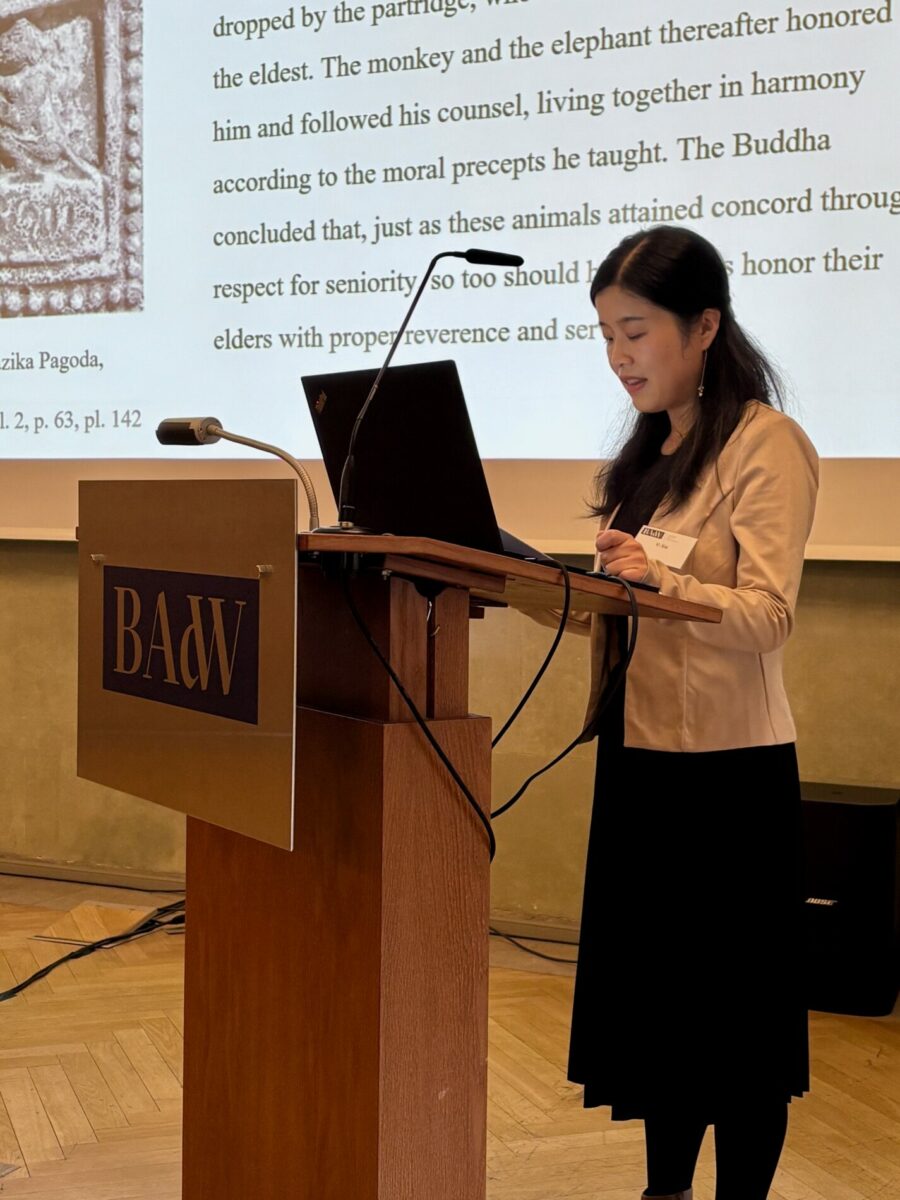
Yi Xie
Veneration Among Animals: The Kapiñjalajātaka and its Representations from Kucha to the
Himalayas
The narrative of the Buddha’s past life as a kapiñjala (partridge) is well known across various Buddhist traditions. Central to this jātaka tale is the theme of mutual veneration among animals based on age, presented as a moral lesson for monastics: to respect and honor senior members of the sangha. Notably, among the extant versions of this narrative, only the one preserved in the Śayanāsanavastu of the Mūlasarvāstivādavinaya features four animal characters – the partridge, hare, monkey, and elephant. In contrast, other versions from schools such as the Theravāda, Mahīśāsaka, Mahāsānghika, Dharmaguptaka, and Sarvāstivāda include only three animals: the partridge, monkey, and elephant — omitting the hare. It is especially significant that both three- animal and four-animal variants are visually represented in the cave paintings of Kucha, an important Buddhist center along the Silk Road. In Kizil Cave 114, for instance, three animals are depicted standing atop one another in accordance with age, aligning with the abbreviated version of the tale. In contrast, Kizil Cave 58 and Kumtura Cave 63 depict four animals, with the hare carried under the monkey’s arm – reflecting the Mūlasarvāstivāda version. Representations of the Kapiñjalajātaka also appear widely in the Himalayan region, particularly in narrative thangkas. As these regions adhere to the Mūlasarvāstivādavinaya, the depictions consistently include all four animals. By examining both textual and visual versions of the Kapiñjalajātaka from Kucha to the Himalayas, this study highlights the intersection of artistic transmission, sectarian affiliation, and regional Buddhist development. The presence or absence of the hare offers an illustrative case for tracing the influence of monastic lineages and their associated narrative traditions across time and space.